
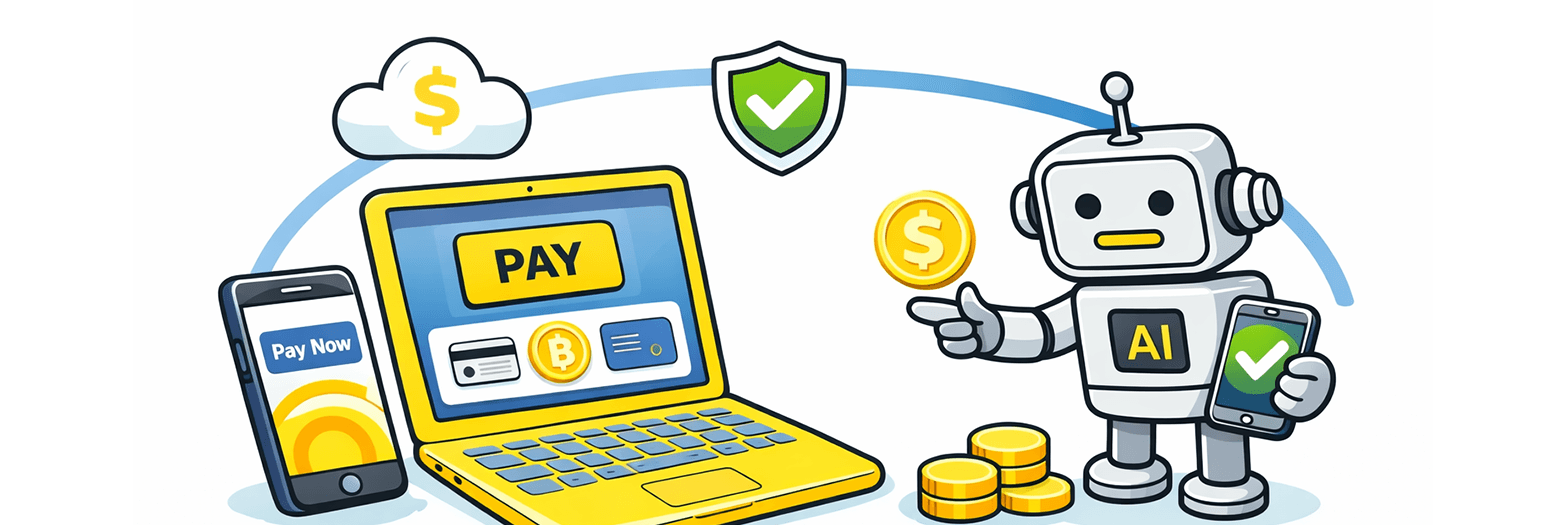
Picture a travel bot building a trip at 2 a.m. It finds flights, hotels, and cars in seconds. Then checkout hits. Carts fail to load. CAPTCHAs demand proof. Card forms ask for details no machine owns. The purchase flow was made for people, so the agent stalls.
Most checkouts revolve around screens full of buttons and fields. They ask for shipping confirmation or a one-time password sent by text. Those steps need a live browser tied to a person, with cookies, consent banners, and clicks. AI agents work through APIs – no screen, no fingers, no personal identity to attach to a session.
These agents also run nonstop in the background. They compare prices across many sites, watch inventory, and fetch content. Transactions often cost pennies or a few dollars. Fixed payment fees stack up fast and wipe out margin on small charges.
Sites defend against bots with CAPTCHAs and cookie gates that stop traffic without a clear human signal. An autonomous agent moves at machine speed and gets blocked unless sites can treat it as a known, trusted system, not a threat.
Now consider payments without pages or clicks – no carts, no OTPs, no detours. Direct system-to-system payments where identity is verified instantly, spend is authorized in one step, funds settle in the background, and access arrives right away.
Next, readers will see how programmatic payments open new revenue for WooCommerce stores and publishers. AI agents pay on their own, no screens involved.
How AI-Native Payments Change Shopping and content access
Imagine online shopping without the hassle of carts, forms, and timeouts. An AI agent asks for a product, a content snippet, or a quote. The site checks its rules, returns a price and terms, and if the agent accepts, it pays in the background. Delivery happens right away. No sessions to keep alive. No clicking.
This reverses how e-commerce works today. Requests move straight to payment, then to fulfillment. No abandoned carts. No tabs stacked across a browser.
Pricing shifts with each request to match small, frequent tasks:
- Pay per article read or downloaded
- Charge by API call
- Bill per file or per SKU unit
- Meter access by minutes spent on data sets
Fulfillment follows the same digital rhythm. Deliveries arrive as expiring download links, time-limited keys that unlock content, tokens that represent a shipment queued for later, or credits that allow measured API usage.
The recordkeeping is built for machines. Each transaction notes which agent made the request, the policy applied, and the rate limits enforced in code. Receipts come out automatically so merchants track revenue precisely and control consumption without manual checks.
Building infrastructure for agentic commerce with programmatic payments
Card networks were built for people swiping cards, checking charges, and filing disputes. AI agents don’t work that way. They run unattended and make lots of tiny purchases, often under a dollar. Fixed fees wipe out margins on those payments. One-time passwords and manual approvals stall the process and break the workflow.
OAuth and webhooks help with identity and event alerts, but they don’t settle money on the spot. Agents need request, pay, and receive to happen in one motion. Delays create confusion and invite fraud.
Developers want one simple path. A single API endpoint should quote prices and terms, verify payment, and deliver the resource in the same call. No embedded frames. No multi-page redirects.
This new stack drops old assumptions and uses parts built for agent-led commerce. First, it confirms who the agent is and enforces spending rules. Next, programmatic quotes return precise, per-request pricing. Payments move through protocol messages that are clear and secure. Fulfillment is idempotent so repeated requests don’t trigger errors or double charges. Each transaction produces a machine-readable receipt tied to a resource hash, which makes audits direct and reliable.
How to use PayLayer with x402 for automated purchases on WordPress
PayLayer is a WordPress plugin built to make AI-native commerce work on WooCommerce stores. It runs alongside the regular storefront, so people browse and buy like always. AI agents use a dedicated x402‑compatible endpoint in the background, and bots skip forms and CAPTCHAs and go straight to an automated payment path built for them.
The x402 protocol turns machine-to-machine payments into a single exchange. An AI agent asks for price and terms in one request. If it agrees, it submits a signed payment immediately. The system replies with a machine-readable receipt and the purchased content or product in the same response. No extra clicks. No delays.
Merchants decide what’s available to automated buyers by marking specific products or posts as AI‑payable. Pricing is flexible – ten cents per article, $1.25 per download. Policies define who can buy how much, when refunds apply, and rate limits that keep traffic under control.
To get started:
- Install PayLayer on the WordPress site.
- Activate the x402 endpoint in the plugin settings.
- Select which SKUs or posts are accessible via AI payments.
- Set pricing and any quotas or spending rules.
- Test with sandbox agents to verify the flow.
- Watch logs, adjust limits, and tune content exposure based on real usage.
This setup gives merchants practical tools for programmatic payments without disrupting the current experience. People shop normally. Machines purchase at high speed.
Monetization models that fit AI agents, not humans
Micropayments fit AI agents well. Charge a penny or two for each snippet, image, or data row an agent pulls. Tools that summarize or check prices grab tiny bits often, so costs stay low while revenue adds up over time. This model monetizes frequent, small requests without scaring off automated buyers.
Tiered access lets publishers match price to depth. Offer free metadata so crawlers get the basics, then charge for full articles or high‑res downloads. For instance, $0.05 per complete article fetch or $0.50 for a dataset export makes deeper use paid while surface info stays open for broad indexing by bots.
Time or usage billing fits services hit by repeated queries. Premium search, inventory checks, and constantly refreshed shipping quotes work this way. Charging per minute of API activity or per query matches real use. Payment then scales with demand instead of a flat fee that ignores actual consumption.
Publishers also need to guard ad revenue from heavy crawling. Proof of payment before high‑volume access helps, and so does identifying user‑agents with unique credentials and whitelisting only trusted bots. This setup filters unwanted traffic and turns paid AI crawling into income instead of a cost center.
- Micropayments: small charges ($0.01 – $0.25) per snippet, image, or data row
- Tiered Access: free metadata vs paid full text or high‑res media
- Time/Usage Metering: billing based on API minutes used or queries made
- Publisher Controls: proof of payment requirements and trusted agent whitelists
How you’ll have to manage trust, risk, and operations in AI payments
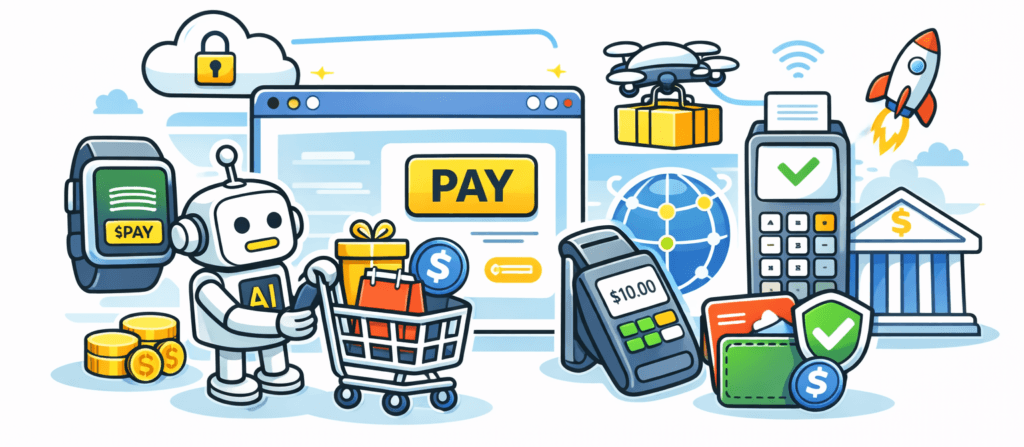
Trust sits at the core of agentic commerce. Merchants need confidence in what AI agents can buy, how fast purchases occur, and under which rules. Set hard caps on spend and request rates. Tie every transaction to what was delivered with signed receipts linked to content hashes. When refunds or disputes come up, automated policies resolve them without manual effort. Peace of mind matters, and it shouldn’t slow the flow.
AI agents need prices and receipts that are machine-readable, predictable, and verifiable. Treat agents like API clients with rotating keys and signed requests. Keep security tight without extra steps for people. Careful logging flags odd behavior early while keeping the experience smooth.
Separate AI-driven revenue from traditional sales to get clear visibility into a new channel. Track which agents perform best, average price paid per resource, and throttling patterns. Use those insights to tune pricing and protect margins as usage grows.
Start small. Audit the site for agent-friendly endpoints. Decide which products or content to open to automated buyers. Pilot a modest AI-payable catalog to test, learn, and avoid disrupting existing workflows.
This step-by-step approach builds trust and opens new revenue streams through programmatic payments built for machines.
Leave a Reply