

AI-driven commerce often feels awkward. I’ve watched smart agents bump into old checkout flows that were built for people clicking buttons, not software making decisions.
x402 fixes that. It’s an HTTP-native payment protocol designed for software agents to pay and get access without a checkout screen. No pop-ups, no prompts – just standard web requests doing the work in the background.
Picture an AI assistant spotting a price, paying on the spot, then unlocking content through normal web calls. It happens while a person browses like usual. No carts, no forms, no friction. I like how direct it is – machine-to-machine, end to end.
Here’s the point: x402 explains prices in a way agents understand, settles payments instantly, and grants access through the same web plumbing the internet already uses. That’s why I see teams picking it for AI-driven storefronts and content platforms. It removes the human-only steps and lets software handle the busywork quietly, reliably, and fast.
Why AI payments need a protocol instead of human checkout
Checkout flows were built for people clicking buttons and filling forms across a bunch of screens. They rely on a person to type billing details, pass 3‑D Secure prompts, and read receipt emails. Software agents don’t have eyes or fingers, so they trip over these steps and end up with awkward workarounds that break.
Many payment APIs blend business rules with access control, right next to the logic for who gets in. Mix it all in the same place and the setup turns fragile. Bots slip through, or the whole thing fails when a UI shifts by a pixel.
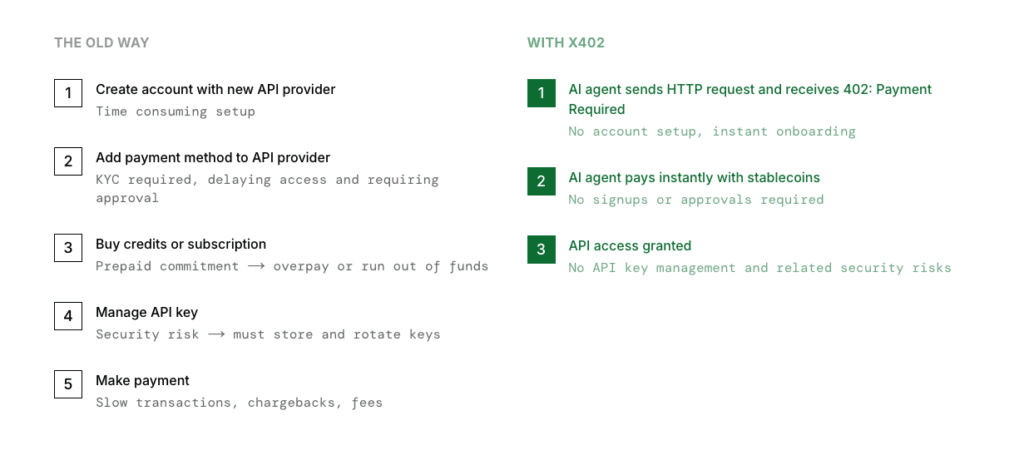
A clean protocol fixes this. Spell out how to show prices, start a payment, and grant access, in one format any agent understands. No custom glue code on every new site. Speak the same language everywhere and let the transaction happen quietly in the background.
Publishers see fewer lock‑in headaches and gain new pricing options beyond subscriptions. Charge per article read or per minute watched, tuned to actual usage, not a one‑size‑fits‑all monthly plan.
Merchants benefit too. Tiny purchases start to make sense. Card fees swallow small sales and fraud checks assume a slow human on a phone. With x402‑style protocols, micro‑transactions move fast and stay safe without the usual overhead.
How X402 establishes trust with mandates and verifiable credentials
I think of mandates like a signed permission slip for an agent. They spell out what it can buy, how much it can spend, and for how long. The principal, a user or an organization, sets up automated purchases in advance and skips manual approval on every transaction. It’s like giving an AI assistant a budget and a shopping list at once.
Verifiable credentials work as cryptographic badges that prove an agent’s rights without exposing private details. If an agent has a paid tier or a licensed model, these credentials confirm that status securely. Sites verify them statelessly, so there’s no session tracking or sensitive data storage. The proof stands on its own.
Here’s the flow. The agent fetches the price with a simple HTTP call. It sends a payment intent that references its mandate, a promise backed by prior authorization. After instant clearing behind the scenes, the site returns proof of payment. The agent presents this proof to the resource endpoint and gets access right away.
Tokens or receipts don’t float around. They bind to the mandate and to the specific assets requested. This reduces replay attacks because tokens won’t work elsewhere. Revocation is precise too. Pull one user’s access without touching anyone else’s session.
x402 lives inside HTTP, so sites serve human pages and machine endpoints from the same domain without friction. PayLayer routes bot payments on a separate path, quiet and fast, while humans keep the same experience they expect.
What you can build with X402, from paid content to programmatic purchases
x402 makes it easy for AI agents to pay for digital goods without slowing down. Picture paywalls for premium articles, API calls, or session time where software pays only for what it uses.
WooCommerce shops list machine-priced items like data exports or usage credits, and agents buy and redeem them instantly. No cart. No delay. For AI models or data APIs, x402 supports per-call payments at high speed so services connect smoothly without human clicks.
- Meter content by article, API call, or session time to match pricing to real consumption instead of flat subscriptions.
- WooCommerce stores expose SKUs priced for machines. After payment through x402, downloads or redemptions happen immediately with zero friction.
- Low latency lets AI inference and data APIs accept programmatic payments on the fly, enabling multi-service workflows.
- Integration adds price-discovery endpoints to show costs upfront, verifies mandates as pre-approved spending permissions, then returns signed proofs after settlement. PayLayer middleware simplifies this so you don’t have to rewrite the app.
- Observability logs mandate IDs alongside payment proofs and resource IDs. This traceability makes refunds straightforward and enforces rate limits while spotting abuse across tenants or agents.
Future‑ready AI payments with X402 that are open, fast, and production proven
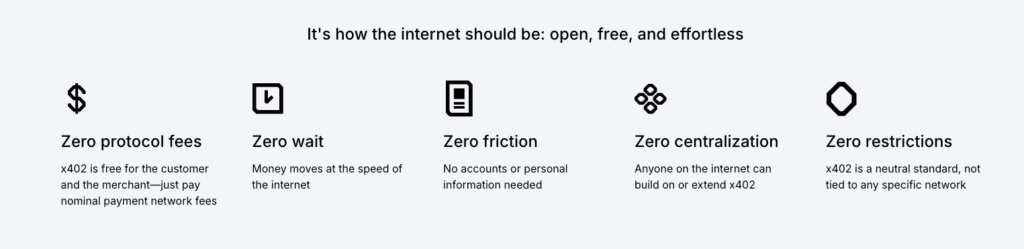
x402 is a practical payment protocol built for AI-driven software, without tying sites to a single network. It’s open and transport-agnostic, so value settles over different rails. Sites pick what fits, and swap when needed. x402 adds no fees on top. Costs come from the payment methods chosen. That keeps pricing clear and lets commerce run smoothly.
The key is how x402 runs transactions. Synchronous HTTP flows give near-instant confirmation, so software agents chain actions across tools in one go. No waiting for approvals or callbacks. It keeps pace with real-time AI workflows. The decentralized design removes any central gatekeeper from the path of compliant participants. Control lives at the edges through site policies and mandates.
Getting started doesn’t need a big rollout. Expose a read-only price endpoint and one paid resource with PayLayer middleware on x402. Watch logs, measure latency, and compare revenue before scaling. It’s a concrete step toward programmatic machine-to-machine payments that feel natural. This approach already runs in production and is ready for what’s next.
Leave a Reply